
Engineering motion that feels calm, not loud
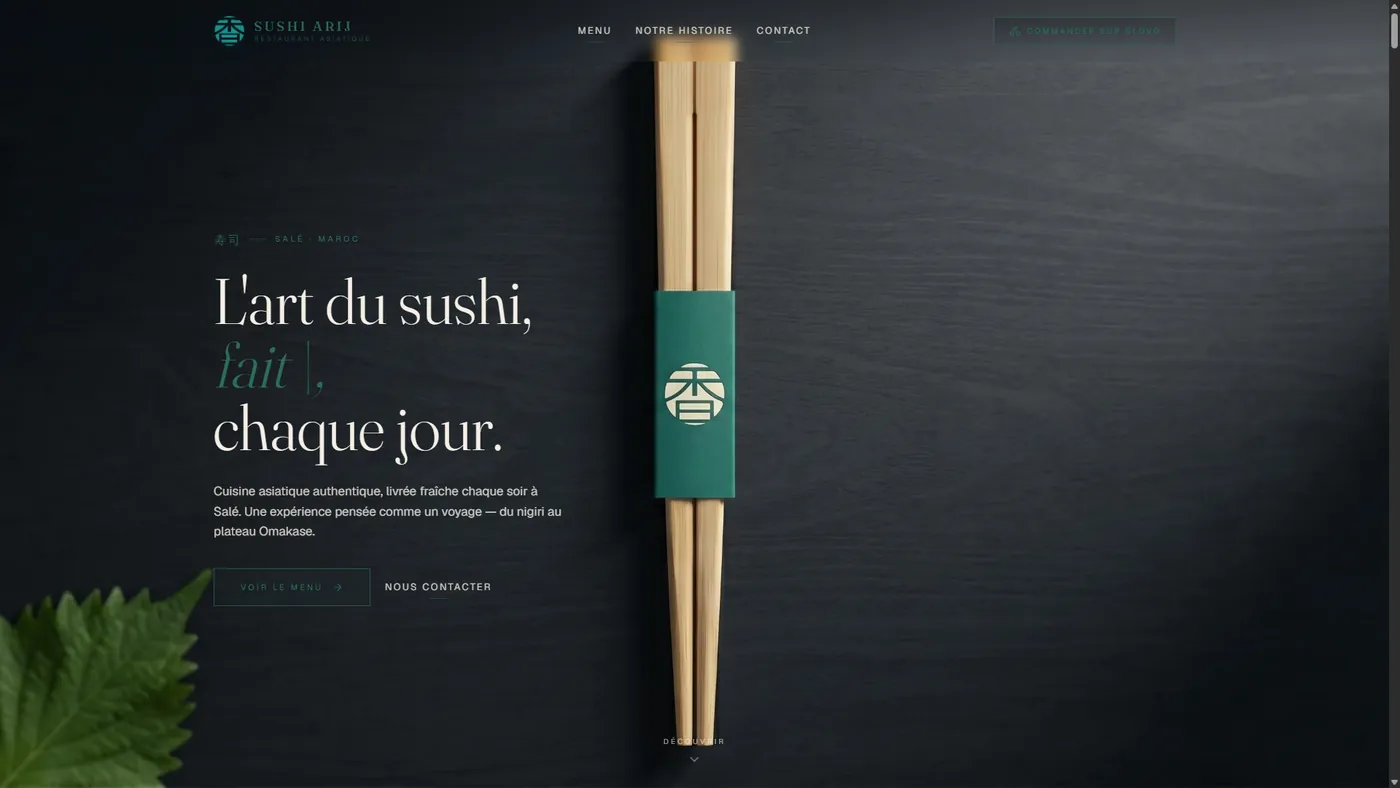
Animation on the web has a reputation problem, earned by a decade of parallax circuses and spinning logos. Used correctly, motion isn't decoration at all — it's information: what just changed, where it came from, what deserves attention next.
The physics of "premium"
Interfaces feel expensive when their movement obeys believable physics. Real objects don't start or stop instantly; they accelerate and settle. That's why almost everything we ship rides on ease-out curves — fast entry, gentle landing — and why durations live in a narrow band: long enough to be perceived (about 200ms), short enough never to make anyone wait (under 700ms for anything blocking).
Good motion is felt, not noticed. If a user can describe your animation, it's probably too loud.
Motion has a performance budget
Every animated property has a cost. Transforms and opacity are composited on the GPU and stay smooth on a cheap phone; animating layout properties — width, top, background position — forces the browser to repaint, and repaints are what users feel as jank. The rule is simple and non-negotiable: animate only transform and opacity, drive everything by scroll position or interaction, and honor the user's reduced-motion setting without complaint.
Choreography beats quantity
One well-timed reveal per view beats ten simultaneous ones. We stagger siblings by roughly a hundred milliseconds, let headline, image and caption arrive as a sequence rather than a pile, and reserve the one "signature" moment — a curtain, a lens, a flooding hover — for the place where brand memory matters most. Everything else stays almost invisible.
Why calm converts
Motion earns its keep when it reduces uncertainty: the menu that slides from the edge you tapped, the form panel that confirms with a settle instead of a jump-cut. Calm interfaces feel trustworthy, and trust is the currency every conversion is priced in. The loud version demos better in a pitch meeting; the quiet version wins in the analytics — which is the arena our work is judged in.